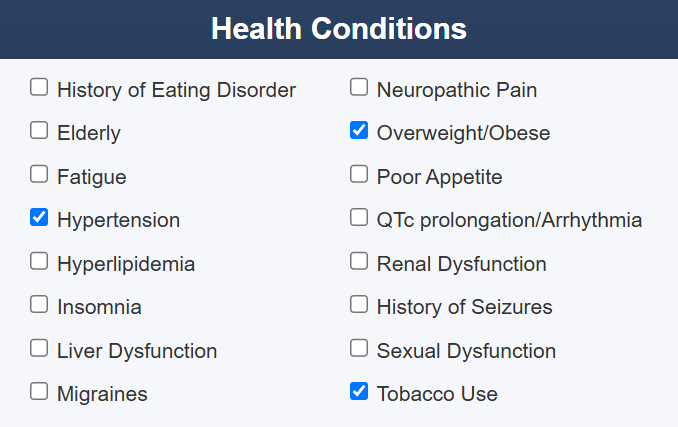
Click the checkbox to the left of the health condition to select it
Health conditions are listed in alphabetical order
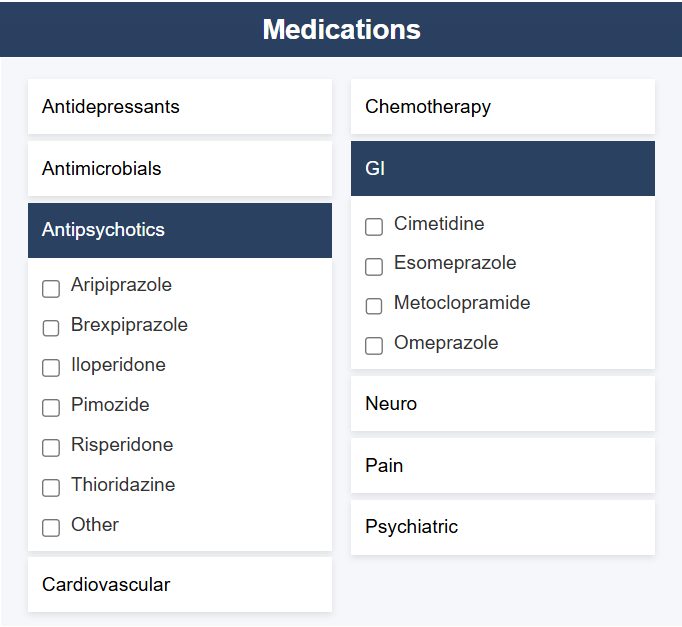
2. Select Patient's Medications
Medications are grouped by their general use
e.g. NSAIDs are in the pain group
Click the box to show medications within the group
Click the checkbox to the left of the medication to select it
NOTE: If you cannot find a medication in the list, it is unlikely to have clinically significant interactions with the antidepressants included in the selction tool
3. Submit Patient's Health Conditions and Medications
Click the "Submit" button
4. Click Antidepressants to Review Alerts
Interpreting Alerts
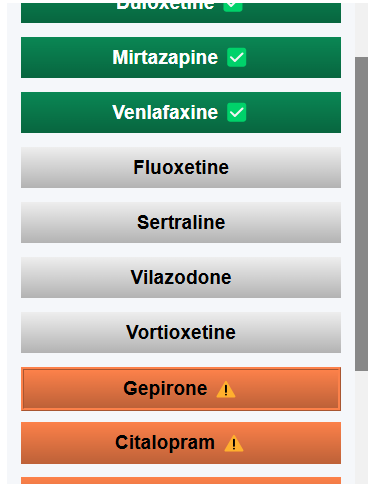
Color and Symbol Explanation
✅
Benefit Identified
Benefits may outweigh risks
⚠️
Concern Identified
Risks may outweight benefits
❌
Contraindicated
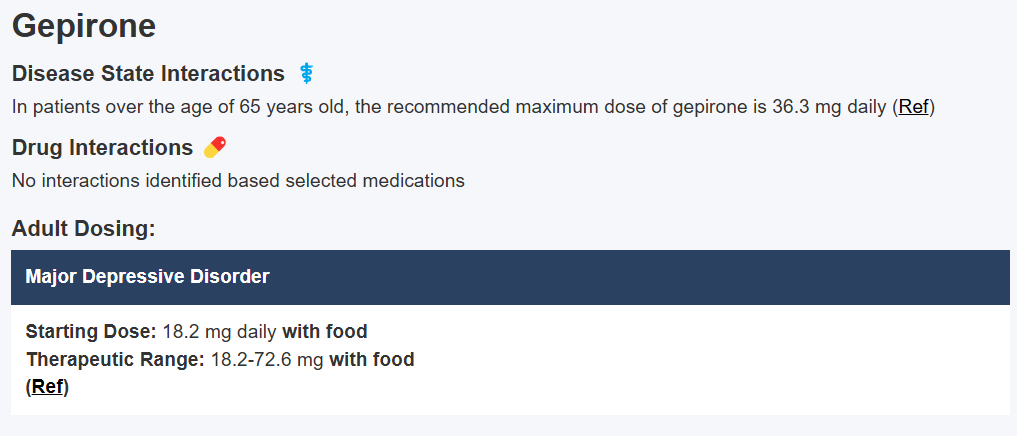
Disease State Interactions ⚕️
Explanation of how patient's health conditions and antidepressants may interact
Drug Interactions 💊
Explanation of how patient's medications and antidepressants may interact
Antidepressant Dosing Information
Click indication to display dosing information
6. Filter Antidepressants
By Antidepressant Drug Class
Click the dropdown box to the right of "Drug Class"
Select the drug class of antidepressants you want to see:
Displays color and symbol explanation for antidepressants
Reports Bugs
Send a report if the Antidepressant Selection Tool is not working as expected
Give Feedback
Feel free to share your thoughts, suggestions, or questions to help us improve the Antidepressant Selection Tool
Frequently Asked Questions
Initially, yes. The Antidepressant Selection Tool currently focuses on antidepressants, helping you find the safest and most effective options for your patients based on their health conditions and current medications. We plan to expand the tool to include other psychiatric medications over time, based on user feedback.
Yes, for now. The Antidepressant Selection Tool currently focuses on drug interactions with clinically significant implications, like contraindications and the need for dose adjustments. We plan to expand the tool to assess other relevant drug interactions in the future.
Currently, the tool is designed for adult patients. We may consider adding functionality for other populations, such as pediatric or pregnant patients, as we gather more feedback and refine the tool.
The Antidepressant Selection Tool is based on clinical studies and package insert information, but it’s intended to support—not replace—your clinical judgment. It highlights key risks and benefits based on common interactions and clinical evidence.